
Everything is Connected
Why understanding the truth isn’t the same as living it

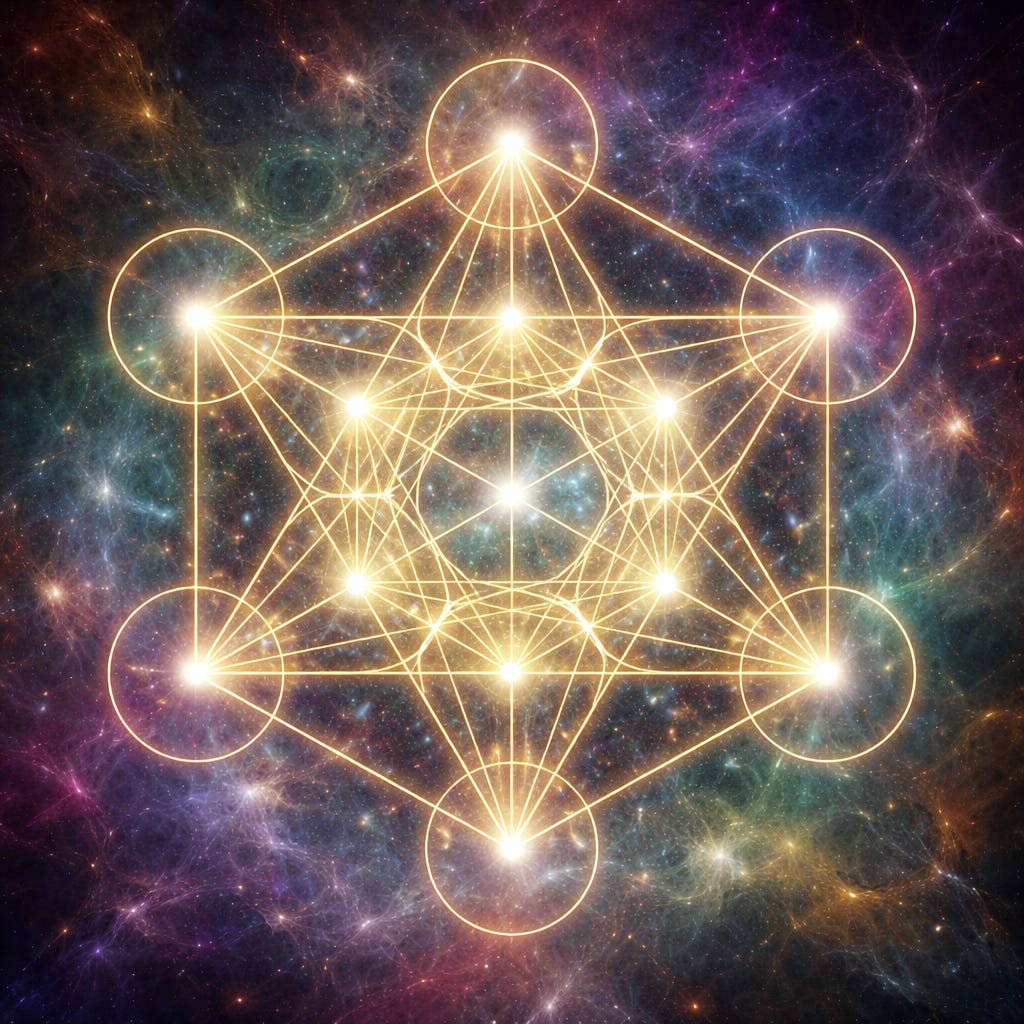
For more than 100 years, we’ve known from quantum physics that everything is connected. But knowing this doesn’t necessarily change anything. It’s like this “Oh, wow!” moment, but then we regress back into our default operating system.
Coming to a new understanding of life in such a way where we literally change the way we think and feel takes more than watching a YouTube video by some super-duper PhD-type physicist with beautiful animations. Such videos are profound and confounding to our logical minds. But if we watch them over and over and really think about them, they can become solidified in our intellectual understanding of the makeup of the universe.
However, most often a very real human tendency called “cognitive dissonance” kicks in, which is an attribute where when faced with two seemingly opposing truths, our minds go with the more palatable one.
If we’re truly connected to all people, all animals, all plants and trees, all things, and even celestial bodies, what are the implications of such an understanding? That’s where cognitive dissonance takes over. We think, barely at the level of conscious thought, “This is too much to process. I’ll just keep on trucking through life as I have.”
And so, human progress is painfully slow because even when faced with undeniable evidence that we’re ignoring the true nature of the universe, it’s far easier to just keep on keeping on.
As an example, what we understand of Darwin’s “survival of the fittest” is actually a misunderstanding of his research. What his work revealed is that adaptability and cooperation are what ensure the survival of a species, not that one is stronger, faster, bolder, or more aggressive.
We think of African lions as the fiercest and “fittest” of species while ignoring that 50% of their diet is carrion, which means they are just as much scavengers as they are hunters. We also don’t give much thought to the well-known fact that they hunt the weakest and slowest of the species they seek. So what they’re actually doing is culling herds of their weakest because lions are not fast enough or possess enough stamina to hunt the strongest. Thus, they’re contributing to the strengthening of the herds by removing the weakest among them before they can procreate, which can also be understood to mean that lions are helping zebras become genetically stronger.
A well-known story about the reintroduction of wolves to Yellowstone National Park revealed that when they returned to the park, all sorts of other species prospered, including the return of aspen, willow, and cottonwood along the riverbanks – revealing the interdependence of species, both plant and animal.
Everywhere we look in nature we see symbiotic relationships, not some species dominating others. If “survival of the fittest” means strength, aggression, and stamina, then we’d have far less genetic diversity on this big blue ball we call Earth. In fact, the stronger and more “fit” that some would become would mean a decreasing number of less-fit species, which would also mean that the “fit” species would eventually consume their food sources and slowly perish.
Sound familiar?
I’m not saying anything we don’t already know. In fact, these concepts are regularly discussed in high school biology classes. The rub is that we haven’t yet changed our paradigm to match our scientific understanding. We even have many people, egged on by mendacious podcasters and bloggers, who believe that science is a problem that distorts our thinking and needs to be disregarded.
How convenient.
Everything being connected is not just about species and subatomic particles; it’s also about how we become more conscious beings. Which also means that as we become more conscious, we acquire the ability to grasp confounding truths when faced with undeniable evidence.
But how do we do this?
One thing I’ve heard many times, and even felt myself at times, is that after spending many years — even decades — deeply involved in healing and growth modalities, that it seems as though we’ve barely progressed. It’s like climbing a mountain with an elusive peak that never seems to appear much closer than it did an hour ago or two hours ago.
There are many reasons for this perception and the truth of how slowly we progress. The topic at hand — in the context of everything being connected — is that we tend to overlook one critically important understanding about what human growth requires.
Allow me to digress for a moment. I’ve never considered myself very good with plants. I’ve even heard myself say more than once that I tend to kill plants. I can never seem to know whether I’m watering too much or too little or providing too much direct sunlight or not enough. Enter AI — I snap a photo, upload it, and ask what’s causing the plant to be in distress. Within seconds, I have a detailed analysis and prescriptive remedy.
I like having plants in my home for many reasons, but I also feel a mild stress about them because I always feel unsure of my care for them. Will I kill them or finally figure out how to nurture them to health?
Plants require many things to thrive: the right soil composition, the correct size pot for the species, and the correct amount of water and light. They also thrive more when exposed to good vibrations, which is why those we deem to have the proverbial green thumb will talk or even sing to their plants. Research has shown that we form psychic bonds with our plants — that they sense and respond to what we’re feeling.
Plants require many things to prosper — and so do we.
Our journey of healing and growth requires many things. Even hiking up a mountain requires a complex matrix of conditions and elements if we’re to make it to the top.
To truly progress in a meaningful way in terms of a spiritual journey of healing and growth requires many things. And here’s the catch…
Those many things are not linear.
There are no 10 (linear) steps to spiritual freedom. Even 12-step recovery, which is taught to be worked in a progression from 1 through 12, is not actually linear. When we truly work a 12-step program, we’re most often working half a of dozen steps at any point in time. We’re jumping back and forth and revisiting constantly.
This may seem like an overly simple concept, a kind of “Yeah, so what, Glenn? I already knew that.”
True, but what I’m getting at is that we need to more deeply embrace this notion of “many things” so that we can continue to explore modalities and approaches. For example, research shows that gut health has a notable effect on emotional health. Thus, nutrition is fundamentally related to a journey of emotional and spiritual growth.
We know that healing from emotional trauma is vital for growth to occur, but what we don’t talk much about is the need to cultivate the intellectual side of spirituality in tandem with our emotional healing.
Why? Because emotional trauma causes us to act in ways that cause continued pain for ourselves and those around us. But merely releasing the emotional trauma is not enough to change our behaviors. We also need to explore our beliefs and attitudes that were driven by the emotional trauma so that we can release outmoded beliefs. And releasing old beliefs can be as challenging as releasing trauma. Yet we need both to truly transform.
It’s like watching those wonderful YouTubes videos on quantum physics but never truly being able to integrate the implications of the understandings into our daily lives. With physics, we begin with mental gymnastics, which require deep emotional cleansing work to fully integrate. With emotional cleansing work, we need to engage in a form of mental gymnastics to try on new belief systems and see how they fit.
If we focus too much on the emotional without developing the intellectual understandings, we may re-wound ourselves by the mere nature of the old beliefs we’re still holding on to. Whereas if we focus too much on the intellectual without the emotional cleansing work, we will never be able to authentically embrace the concepts we’re learning because we’ll be thinking them, not feeling them.
And so now you may be wondering, “Well Glenn, that makes sense, but what of it? We do our trauma therapy work alongside the cognitive work, and we’ll reach nirvana lickety-split.”
Well, not exactly. There’s a little more to it than that, which is why I so strongly advocate for multiple modalities, with a primary one being a meditative practice.
What I’ve come to learn is that how we think is habitual. It’s what is often referred to as the egoic mind or the egoic operating system. It’s the mental chatter rambling away in the background, ever-present — affecting our beliefs, behaviors and emotions.
And it doesn’t change until we consciously and actively work to change it. Our thoughts do not change by forcing ourselves to think different thoughts. Affirmations are great, but without emotional content, they’re useless — which is why this process needs to work in tandem with the emotional cleansing work.
With each new plateau of emotional healing, we need to take time to re-evaluate our beliefs and attitudes. We need to literally challenge ourselves to think differently, often confronting a feeling that we’re going insane, because to not think the way we’ve always thought (which is also how most of humanity has always thought) can only mean we’re crazy.
But no. Enlightenment and insanity may appear similar at times, but they are not the same. Insanity is disassociation from reality, while enlightenment is embracing the true reality, not the assumed reality that we’ve been conditioned with.
It’s important to note that this is an active process and is only effective when it flows from a meditative practice, which is to say that we spend long durations of time each day observing our thoughts without identifying with or judging them. When we do this, we are literally rewiring our brains by creating new neurosynaptic pathways that enable us to consciously change our thoughts.
This may take months or even years, but it’s how we progress in such a way that the mountaintop will appear distinctly closer each day.
Re-wounding happens more often than you may think and is precisely why so many spiritual warriors feel frustration with the length of time they’ve engaged in healing work, only to feel like they’re still at first base.
The alternative is to blend an emotional healing practice with a meditative practice with an intellectual process — to roll the three together with the recognition that we need to progress in somewhat equal steps, never giving an unbalanced focus to any one of the three without the other two.
If we notice a thought we deem unpleasant and say to ourselves, “I don’t like this thought I’d like to change it,” we can’t just not think a thought, because the act of trying not to think it is, in fact, thinking it. But what we can do is distract from the thought by returning to presence through breath and emptying the mind. And this we can only do if we practice sitting meditation each day. Through practice, we cultivate the ability to carry the meditative state throughout the day, each day. Each time we redirect ourselves from an unpleasant thought, we are creating new neurosynaptic pathways in the brain — literally rewiring it.
But if we haven’t done the emotional cleansing work this won’t work, because the deeply buried trauma will overpower our attempt at emptying the mind. With the three practices in tandem though, we achieve an almost mystical trinity of accelerated growth.
Everything is truly connected — from subatomic particles to celestial bodies, me and you, us and them, liberals and conservatives, plants and trees — we are all one. So too, our spiritual process is interconnected with an infinite number of points. There is no single panacea, no overarching modality, no single guru with all the answers, and no one religion that has it figured out better than the others. We are all infinitely connected.
Indeed, ..."no single guru with all the answers, and no one religion that has it figured out better than the others. We are all infinitely connected." Gratefully, in the absence of external guidance, we have the one, alway true guide within—the soul. To your larger point, it's in that place where we're most interconnected—and have that in common with all sentient beings. Like the song says, "It's in every one of us..." to he guided in various physical and emotional modalities according to our karmic history, current life plan and awakening. Whatever else is happening in the world, we find our rightful path this time around through the centering and stillness of meditation.
Thanks, Glenn. Yes, easier said than done. I prescribe more time out in "Nature." Of course, we are, by our nature, a part of Nature and thus connected to everything else that is part of Nature, which is everything, as you said. So what I mean is time outside with plants and birds and bees and breezes and clouds and all the rest. That's where the all the dots get connected. I recently read a great book on this subject that I highly recommend: The Light Eaters: How the Unseen World of Plant Intelligence Offers a New Understanding of Life on Earth. I'm now carrying it in my bookshop at HerbWalks.com. As for cool videos by physicists, this one, called "The Powers of Ten," is one of the coolest and takes only a minute to watch: https://herbwalks.com/powers-of-10/.